
Rhodes, the island of Knights
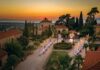
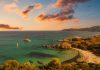
Rhodes is the biggest island of the Dodecanese. It lies at the south-eastern corner of the Aegean, opposite the coast of Asia Minor, about 11 miles away. It has an area of 1398 square kilometres, being 79.7 km long and 38 km wide. The city of Rhodes is the capital of the Dodecanese Prefecture, a group of islands formerly known as the Southern Sporades. The name Dodecanese (Twelve Islands), although finally prevailing, does not correspond to the actual number of islands making up the Prefecture, there being many more than twelve. The medieval town of Rhodes, or the Old town as the locals call it, is a living monument. It is a well preserved centre where many Rhodians live and work. Various projects are currently being implemented and developed by the Ministry of Culture and the Municipality of Rhodes in aid of the restoration and improvement of the medieval town, which has been designated a world monument of architectural heritage by UNESCO.The fortress town was divided into two parts: The KOLLAKIO or KOLLAKO to the north, including the Street of Knights, leaders, the Palace of the Grand Master (Castello), the official churches of the Order, the Hospital (today’s museum), and other edifices. This area was separated from the rest of the town by inner fortifications, sections of which are still preserved. The BURGH or HORA to the south, with the old market (Socrates Street) and Turkish bazaar around Suleiman’s mosque, and other sites. Hora was the area for the bourgeois, and the Greeks, as well as other nationalities (Jewish, Turkish and others) each lived in their own districts. Dating from 1522 – the start of the Turkish occupation of Rhodes and their settlement within the fortress town – construction began on the newer districts beyond the walls, the so-called Marasia. These took their names from the major churches of the districts Ag. Anargyroi, Ag. Iannis, Ag. Anastasia, Metropolis, Ag. Giorgios Ano, Ag. Giorgios Kato or Kammenos (burned down), and Ag. Nikolaos. Greater Marasi, or Neohori, was developed by the Italians (1912-45) who also constructed the recent buildings of Mandraki city centre. They did not employ the island’s traditional style, but rather tried to echo the walls and fortifications, creating an architectural complex that impresses even now. These buildings included the Prefecture Administration building, the City Hall, the Port Authority, the Post Office, the Bank of Greece, the Aktaion, the New Market, the National Theatre, and the Hotel of the Roses, which now houses the Casino following its restoration (April, 1998). Adjacent to the Prefecture building is the Church of the Annunciation, modelled on the destroyed Knights’ church of Saint John. Opposite the National Theatre is the mosque of Murat-Reis. The visitor may see other buildings of the same period in the area of Neohori: the Teaching Academy of Rhodes, the Girls Orphanage, the Hospital, and others.